The End of Semester Push

COVID-19, Personal

Well, I’m going to look rather stupid. In my last post I went on about how I had learned to relax, to forgive myself for delays and lack of productivity, and how I didn’t care as much about getting work done since it’s my last semester and I have a good foundation to fall back on. All of that still applies, but as we come into finals week, I find myself grudgingly trying to get back into the grind. I say grudgingly because it really does feel involuntary, like a learned response from all the finals weeks I’ve pushed through. I know I don’t have to push hard. I know that I only need to nominally get things done and I’ll be perfectly fine. But old habits die hard.

Of course, this means that I’m having to up my game in terms of overcoming the obstacles to my productivity. When I could afford not to care, I didn’t have to do much to ensure that I got work done to a certain degree. I basically just had to sit down, put on a podcast for background noise, maybe start a pomodoro timer, and then do the work. It wasn’t a process I could effectively do everyday, which was fine when I didn’t have large scale end-of-semester projects to finish.

The first thing I’ve done to try and increase my productivity is change my environment. Normally, I would work at my desk in my bedroom. It’s good for those intense bursts of work when I need to lock myself away, but when my entire day is effectively being locked away, I go even more stir crazy trying to work in one small corner of my apartment. Instead, I’ve moved a lot of things into my living room. Since my roommate moved out, I don’t have to navigate around someone else needing the space, so I’ve been able to spread out a bit, not only for work but for more fun activities. I’ve hooked my Nintendo up to the bigger living room TV and just today brought my guitar amp and pedalboard out so that they aren’t crammed into the back corner of my bedroom. It’s been nice having more light during the day while working. It’s also had the side effect of making me sleep a little better, since my bedroom has effectively been reduced to that purpose alone and I can’t be overwhelmed by all my distractions being there when I go to bed.

Of course, this change in location has come with downsides. The wider space does offer more passive distractions. I’ll be working and look over into my kitchen, get hungry, and whip up a small meal, and before I know it, I’ve spent half an hour cooking and eating and my work flow has been entirely stopped. The light that comes in from the two bigger windows is nice, but it also means that I’m more inclined to get curious and peek out at what’s going on outside. Solve one problem, introduce another.

The biggest issue I’m facing is related to my lack of desire to get schoolwork done. In past semesters, I’ve at least had the drive to get the work done, if only to make it to the next break. My future and other passions have always been far off entities, things I could imagine but would not be able to reach or realize for a long while. Now, that is not the case. The future is in sight. It’s not only reachable, but increasingly imminent. The things I want to learn and accomplish are so close I can taste them, and I’m obsessing over the idea of finally being able to address them. School has always been in my way, but for the first time I can see a not-too-distant future where it isn’t in the way, and that makes every second I have to stick with schoolwork more unbearable. That in turn makes me fall a bit more behind each day, which makes me feel overwhelmed and want to work even less.

It’s kind of funny to be honest. I feel like I have this kind of issue every time I get to finals week. It rarely matters whether I am behind, but I always feel behind and I never know how I manage to get everything done. It’s like my brain goes into red alert and I descend into a trance of caffeine and anxiety until I find myself finished my work. I really want to avoid that this semester, because it’s honestly hell, but I’m not sure I’ll be able to. The fact of the matter is that whatever I normally do, however it normally works, it does work. Sometimes you just have to bite the bullet. Sometimes you have to hunker down and push through the things you have to do so that you can do the things you want to do. I know I can do it, if I can only sit down long enough.

Self-Forgiveness & A Different Motivation in Quarantine

COVID-19, Personal

It’s been a while since my last post. I could sit here and tell you about how busy I’ve been, how much stress I’ve been under with COVID-19 and the end of semester grind and worrying about moving back home. I wish I could tell you all of that, but the truth is, while all of that stuff has indeed been going on, I haven’t actually been all that busy. I haven’t been all that stressed. I’ve actually been feeling pretty great. Better than I’ve felt in actual years. In truth, the reason I haven’t been posting is because I’ve been putting more effort into self-care, and that I haven’t figured out how to balance it with schoolwork.

In one of my earlier posts, I talked about how I wasn’t great at self-care. I mentioned that I was trying to implement certain things like meditation and regular walks. I mentioned that I had several things that I wanted to do, wanted to implement, but didn’t know how. In the time since, I’ve figured out how. You just do it. The trick is that it might come at the cost of something else, and in my case it has been school and schoolwork.

Let me be clear. It’s not like I’m dropping school entirely. I’m here writing this for school. I still write my papers. But I’ve spent the majority of my life placing school as my top priority. Anything else I had came second, and everything else suffered as a result. I got results from that way of working. I don’t want to brag, but I’ve kept up a 4.0 GPA my entire time at Rowan University. I’ve been seriously dedicated to school, and I by no means want to drop it entirely. But as I said in my Self Care post, there are so many other things I want to do that I haven’t felt capable of doing because I only ever had one priority.

I refuse to sustain that. If I had to pick one thing that isolation has taught me, it is self-forgiveness. It’s an ability that I have almost completely lacked up to this point, despite friends and therapists and professors telling me that I should exercise it, that I deserved it. I never listened until now, until quarantine. Self-forgiveness, in my experience, functions the same way regular forgiveness does. When you mess up, you apologize to yourself, not just by regretting your shortcomings but by providing some way to make up for it. And then, you make it up to yourself and are forgiven.

I’ve had pretty severe issues maintaining motivation for schoolwork since quarantine started. It’s been a perfect storm of being stuck in a relaxed, non-professional environment, being isolated with no one around to truly hold me accountable, run-of-the-mill senioritis, and an overall dissatisfaction with the way I’ve been feeling mentally and where I am with my passions. It’s as though some switch has flipped in me, that I’ve reached some sort of breaking point. The fact of the matter is I’m tired of school. I’m tired of not doing the things that I want to do. And with “graduation” so close, all I can see is my coming freedom. I’m finally going to have time to do all the things I’ve wanted to do, that I’ve been neglecting.

Admittedly, this may not be the greatest tactic for succeeding in school. That’s where the self-forgiveness has come in. I have learned to trust myself. I’ve got a hell of a track record behind me, and even in times where I’m not motivated to get work done, where I procrastinate or struggle, I know that I not only come through it, but excel in doing so. Even with the chaos currently in my life, I have no reason to think that this will change. I trust that I will get done what I need to get done, and that even if I don’t do it to my absurd, perfectionist standards it will be good enough and won’t make too much of a dent in the progress I’ve previously made. I’ve never been a “C’s get degrees” kind of guy, but there comes a time where you have to put your foot down and say “I’m not going to torture myself”. I’m done torturing myself over grades that won’t matter to me ten years from now, especially when I know I can still do well enough to get by, if not better.

So I’ve found a new motivation. I’m forgiving myself, rebuilding my self-esteem, working to pursue my personal interests and hobbies, and looking forward to my future. I’m looking ahead. The future has always scared me, but I’ve been getting excited knowing that I will soon be able to work on my future without restriction. Hell, I’m already starting to. This new motivation might be exacerbating my issues with staying motivated for school, but I’ll be totally honest, I’m not sure how much I care. What’s one more obstacle? I know I can still get things done, and I trust that my work will ultimately be good enough. And if my energy is going to productive activities, to good things that will improve my life and mental health in the long run, then the hit to my school motivation is something I’m absolutely willing to forgive.

Dealing with Solitude: Living Alone During COVID-19

COVID-19, Personal

It’s Tuesday night and I’m Zooming with my friends as I speak. It’s become a staple of our routines. Not daily, but close. It’s pretty quiet at the moment. Everybody’s doing their own thing. We’re just happy to have each other around. When we first started doing this, almost a month ago, it was much different. Back then, the calls were loud and energetic, as we hadn’t been in constant contact since we’re spread out away from home. Some of my friends were in Philly when everything started. One was on Staten Island. Another was and still is living alone in L.A. If I could find one upside to the chaos today, it would be that it has shown us that we can stay connected even while apart, by geography or quarantine. This comes at the cost of some of my friends’ housing, internships, and jobs, so I suppose it’s a pyrrhic upside, but I’ll take what I can get.

The energy of our Zoom calls has dwindled somewhat, but there’s a certain sense of community still, shared suffering, intimacy even. There are some nights where we hardly speak at all. Each of us doing something to ourselves. Those of us still in class might be doing homework (or in my case, attempting then giving up). My Staten Island friend, whose only responsibility was her internship with a live music venue which has cancelled shows through May at the very least, has tried to keep occupied with video games. My L.A. friend, laid off from her job, has done the same, though she has the added advantages of legal weed being able to walk to the beach to pass the time.

Even in those nights where we don’t speak, there’s something comforting about being able to talk to them. There’s something soothing in hearing the sounds of their games and typing, slightly garbled by the internet. It’s something approximating normal, giving something close enough to human contact that we can carry on. We might not be able to huddle up on a couch and play together, but we can make do playing online. It’s almost like we’re making up for lost time, for years of accepting separation while we were all away at our colleges.

In some ways, it’s even better than hanging out in person. It’s certainly logistically easier. We don’t have to drive to someone’s house and calculate how long we can stay before we’re too tired to get home and get ready for bed. Since I don’t have a car and have to depend on my parents and friends for rides (which I will never stop feeling bad about), we don’t have to figure getting me home into the mix. We’re all already home. When we finally tire out, we leave the call, turn around, and we’re already in bed.

To get to the point of this post, these Zoom calls, despite the fact that we don’t always do much and sometimes go far later than I should, are one of the only things keeping me sane while living alone. I used to dream of living alone. Of having my own place, of not having to dance around roommates, of only needing to deal with my own schedule, of not needing to deal with my parents. Of course, those dreams usually included opportunities to get out, be it for a job, a girlfriend, or hanging out in person with friends. They certainly didn’t include social distancing, at least not to this degree. And while I am very introverted and certainly appreciate the solitude, it doesn’t feel as freeing right now as I’d like. It’s not the escape I wanted, and it’s somewhat discouraging considering the image I built up in my head.

There’s a silence in my world right now. It’s a lurking thing. It slithers behind me while I try to drown it out with YouTube and loud music. It creeps around between the chirps of birds outside and the footsteps of people living on the floor above me. It whispers just beneath the hum of the the stove fan, oozes out of the vents of my air conditioner, steams out of my kettle as I make tea for one. It’s silence as white noise, constant and just loud enough to be noticed, just present enough to make you aware of it, paranoid and holding your breath while you wait to hear something, anything. A creaking chair, a muffled voice, a throat-clearing cough. I’m okay with it most of the time. You can’t expect the world to speak constantly, especially when it’s holding its breath. But I’ve never had to deal with it for such a sustained period.

I don’t know where I’m going with this. Rambling as usual. Trying to fill the silence. It’s not a perfect solution, and probably not terribly entertaining. But hey, I might as well speak where I can, right? I’m sure I’m not alone in this situation. All things considered, I’m probably doing better than most. I know my L.A. friend in particular is very extroverted and has been going very stir crazy being stuck alone, to the point that she’s been seriously considering breaking social distancing somewhat to get together with the one or two friends who haven’t gone home. I haven’t really felt this need yet. The Zoom calls are sustaining me, at least for now. It could be worse, after all. I could be old, lonely, technology deprived or technologically illiterate, with no friends whatsoever. I have to try and look on the bright side. I can’t say I’m truly happy with this version of living alone, but I can say I’m thankful it’s not as bad as it could be.

Learning Bass While Procrastinating

COVID-19, Personal

In my last post, I talked about the fact that I needed to work on time management. I have been thoroughly failing at this. I’ve been having pretty big issues with motivation and the longer I go without getting enough work done, the more stressed I get about that work and the less I ultimately get done. I’m the type of person who avoids stress with distraction and procrastination, so as I’ve become more overwhelmed by the work I’m not getting done, I’ve had to find new things to do to keep myself from liquefying into a puddle of panic and guilt.

Excuses, excuses, I know, but cut me some slack, it’s a rough time we’re in. Of course, I can admit that the distractions I commonly turn to might not be the best. My most common distraction is YouTube, and I normally have a solid backlog of videos in my Watch Later, and though I’ve found a lot of great new content to watch, I’ve been whittling it down enough that I’m rapidly losing it as a distraction. Thus, I’ve had to find a new distraction and have taken the opportunity to do something that I’ve wanted to do for several years: learning bass.

Two years ago, a friend of mine had a cheap starter bass that he didn’t need. Looking to make a quick buck, he sold it to me for $20. It clearly wasn’t anything special, but it was a solid starter. I attempted to play with it for a little after I got it, but the songs I wanted to play were far outside my beginner’s ability. You can’t exactly go straight to Les Claypool’s crazy slap bass on your first day. I’m sure I could’ve found easier songs to play, but at the time it wasn’t really a priority, so I ended up focusing more on guitar instead, where I had a few years of experience.

Since then, my bass sat in my closet, accumulating dust. When I found out I would be stuck here at Rowan in quarantine, I pulled the bass out of storage while I was visiting home and brought it back here. A few days ago I finally tried to play it, and the effects of long term storage were obvious. The strings buzzed like hornets in a tin can and the first three frets on every string were dead notes. After some research, I found out this could be fixed by adjusting the truss rod in the neck to give the neck a bit more of a bow. This scared the shit out of me. I had deliberately avoided doing maintenance like this on my guitars, instead paying to have them professionally set up and being careful with them to avoid needing it done again. I couldn’t do this for my bass, as COVID-19 will have closed down Guitar Centers (and I’m cheap and don’t want to spend the money), so I did it myself. It was nerve-wracking doing it on my own for the first time, but at least I know how to do it now.

I’m by no means good at it yet. I’ve looked up some easier songs to learn and am trying to pick up more simple, fundamental techniques before I really get into slap. I’ve got some blisters forming on my right hand, which is a real pain in the ass to type with. That’s what I get for not using a pick, but I’ve been told using a pick on bass is something of a sin, and besides, it’s more fun without one. In any case, I’m going to try and get at least a little practice daily, and maybe with this addition I can get back into the groove of getting things done. Lord knows I need the motivation. Besides, I’ve been told that time management is easier when you have less time, so maybe keeping myself more actively busy instead of passively distracted will help in the long run.

Self Care (And Lack Thereof) under COVID Isolation

COVID-19, Personal

Hello, all. I’m still not used to the idea of blogging, so I’m going to write off the cuff and see where it goes. Maybe it’ll be good. Something personal, maybe even juicy and entertaining. Maybe it’ll just be disorganized ramblings. Who knows? In any case, we all know why we’re here and what’s going on. There happens to be a microscopic elephant in the room. In which room, I’m not sure. Maybe mine. Maybe yours. Maybe every room, hallway, elevator, and entrance. There’s an elephant somewhere, and everybody’s stuck hiding from it.

COVID-19 hasn’t been an easy thing to deal with. As of today (4/7), it’s sounding like the pandemic will hit its peak here in Jersey in a week or two. I’m currently on week three of social distancing and it’s been a real mixed bag. I was lucky enough to secure emergency housing on campus, as my situation at home is currently in flux, and that’s been a mixed bag too, since my roommate has moved out and for the first time in my life, I’m living entirely alone on a ghost campus. In this time, it’s been more important than ever to have something in place for self care.

Admittedly, self care isn’t something I’m great at. I’ve always prided myself on the ability to push myself to (and sometimes past) my breaking point and still come out okay. Definitely not a healthy way to live, especially when you’re like me and deal with mental health issues to begin with. I’ve always been meaning to improve my self care, and yet it gets pushed into the background most of the time. I suppose in some respects I can thank this pandemic for giving me an opportunity to put some much needed energy into this.

Of course, that’s implying that I have put energy into self care. I suppose I have, but certainly not the amount I need and probably not always in healthy ways. It’s difficult to add something entirely new to your routine when you’re struggling to preserve what was already there. There were some things that I was already doing that I’ve struggled to maintain. Most notably, I began meditating daily back in January. I was on a solid streak for a while, but during the past few weeks, I’ve had some difficulty maintaining that streak.

Part of that is because my normal nighttime routine has been almost entirely demolished, though not without purpose. Since I’m isolated here, I’ve been having almost nightly Zoom calls with my friends from home to preserve some sense of social contact. I suppose that’s a form of self care in and of itself. Still, as much as I love them, I probably need to get more comfortable regulating how much time I spend on the call, maybe leaving a bit earlier so I can pick up my standard routine after a delay.

In addition to meditation and Zoom calls, the only self care I’m succeeding in implementing is taking walks once or twice a day to get some sun, leave the apartment. Even then, I’m not terribly consistent with it, but I try as hard as I can. It definitely helps, even if only a little. Beyond that, my self care is, in my opinion, lacking. I’ve got plenty of ideas, but irritatingly few of them make it from theory to practice. I had been reading nightly before the world stopped, and I haven’t been able to get back to that. I wanted to improve my guitar skills. I want to learn bass, since I’ve had a cheap bass lying around that never gets used. I had a plan for a novel that I wanted to start researching and writing. I have no shortage of video games I want to finally get around to playing.

I’ve got plenty of things I want to do, and I’m not sure exactly how to improve any of them. I suppose it starts with time management. Never one of my strong suits, so I suppose that’s where I need to improve most. Any recommendations on that front are more than welcome. I’ve tried everything from the Pomodoro technique to binaural beats for focus to putting on a podcast, and nothing seems to stick. If I can learn to manage my time effectively, to maintain productivity at such a level that I don’t feel bad indulging in any of the self care ideas I have, then I think I will not only deal with this damned pandemic better, but be happier in general. That would be a very welcome change.

Truthometer – Millennials Delaying Marriage Over Debt

Fact Check, Truthometer

As a college student, I have often found myself getting concerned about my future of paying off the loans I have incurred. This concern only magnifies when I consider other plans for my future, such as the possibility of buying a house, getting married, and starting a family. Though I will likely have other hurdles to clear first which will assist me in preparing for these plans, I have often thought about how long it will take me to pay down my loans. As it turns out, I’m not alone in the concern. USA Today published an article claiming that many young Americans, namely Millennials, are delaying marriage due to student loan debt. USA Today bases this on a study from Lendkey, a cloud platform which allows lenders and borrowers to match online in an attempt to โ€œcreate the most transparent,accessible and low-cost borrowing options in online lendingโ€ (Lendkeyโ€™s About Us Page). The article claims that โ€œabout one-third of respondents between ages 18 and 34 say they might postpone marriageโ€ in order to pay off student loans. Setting aside that the title of the USA Today article makes it seem as though most or all Millennials are doing this and not merely one-third, the fact I will be checking is whether a significant portion of young people are indeed putting off getting married due to student loan debt.


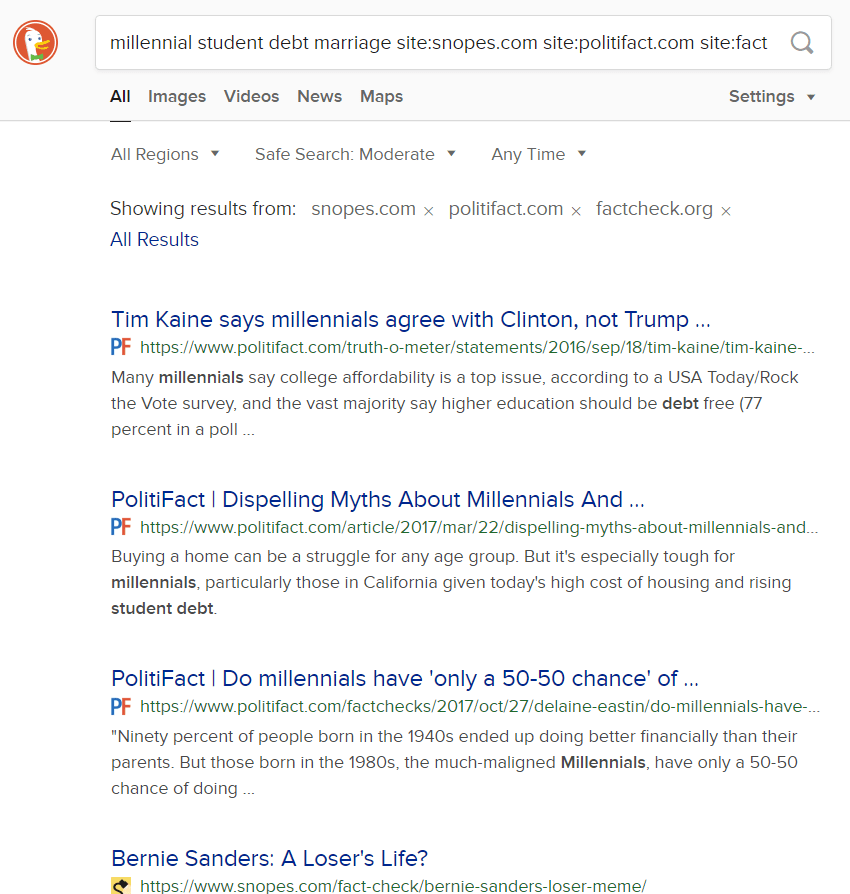
Checking for previous work proved to be difficult for this. DuckDuckGo searches proved unfruitful, as searching various versions of โ€œmillennial marriage debtโ€, โ€œmillennial loans marriageโ€, โ€œmillennial student loans marriageโ€, โ€œmillennial student debt marriageโ€, โ€œmillennial marriageโ€, โ€œmillennial loansโ€, and even things like โ€œLendkey student loansโ€ and โ€œLendkey millennialsโ€. None of these searches yielded pages from Politifact, Snopes, or FactCheck.org which gave figures on either Millennialsโ€™ student loans or their marital status.

The Wikipedia page for Millennials says under the Social Tendencies section that Millennials โ€œthe first in the modern era to have higher levels of student loan debt and unemploymentโ€ than previous generations, that projected trends in 2014 suggested โ€œmillennials will have a lower marriage rate compared to previous generationsโ€, and that Millennials often โ€œdelay some activities considered rites of passage of adulthoodโ€ such as leaving their parentsโ€™ home and living with a romantic partner. The Millennials page did cite a 2014 article from CNN Money discussing Millennialsโ€™ trends with marriage, and this article does also claim โ€œthat college graduates marry later so they are better able to ride out poor economic times just after they finish schoolโ€, citing an Urban Institute report. It is worth noting that CNNโ€™s hyperlink on โ€œcollege graduatesโ€ leads to a page on https://buzz.money.cnn.com/, which seems to be a site made with WordPress. The particular page it leads to only discusses a book which encourages graduating women to lean into their careers and does not actually reference Millennials, marriage, or student loan debt. Overall, checking previous work does seem to suggest that Millennials are getting married less, that they have more student loan debt, and that they are delaying milestones of adulthood, but there is little there to prove too much correlation.

The Social Tendencies section of the Millennials Wikipedia Page (as of 3/10/2020)

With previous work leading to little verification of the claim, I then went upstream on the USA Today article. I first went back to the USA Today article and followed a link to the page where Lendkey discusses their findings. Their findings match the figures cited in the USA Today article, claiming that one third of respondents to their survey between 18-34 โ€œsaid they might postpone marriage โ€” or had already done so โ€” until student debt is paid offโ€. The bottom of this page discusses the methodology of this study, saying โ€œAll figures, unless otherwise stated, are from YouGov Plc.  Total sample size was 1,037 adults who have ever attended college. Fieldwork was undertaken between December 9-13, 2019. The survey was carried out online.โ€ The survey had just over 1000 respondents across all age brackets and does not specify how many of them were Millennials. Thus, while one third of their Millennial respondents might be postponing marriage, if their actual proportion of Millennial respondents is small then it might not be representative of the actual population of Millennials.

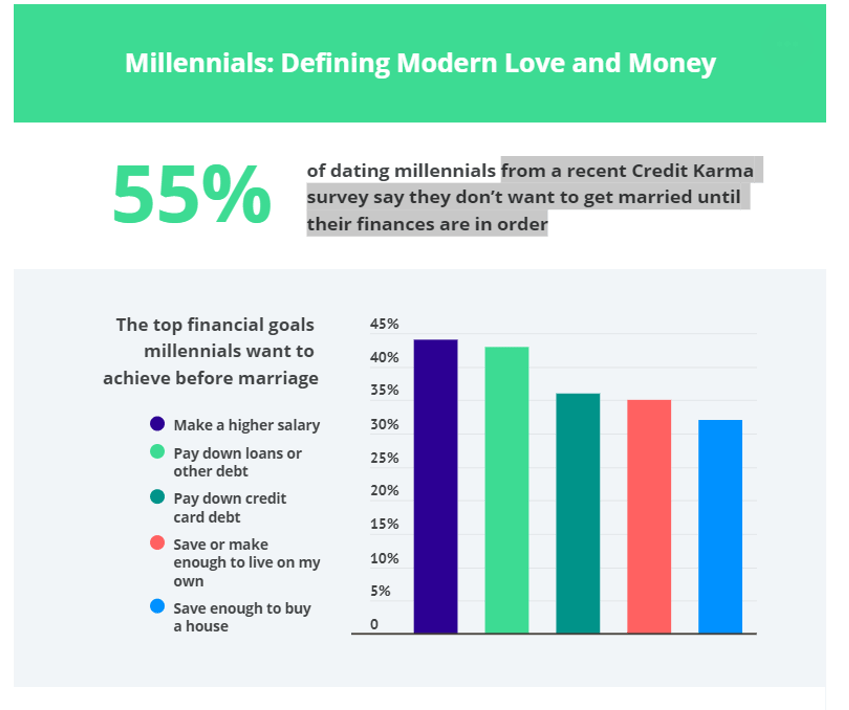
The USA today article does also provide the link to a separate study conducted by Qualtrics on behalf of Credit Karma among 1,036 American Millennials which suggests that โ€œ55% of dating Millennials from a recent Credit Karma survey say they donโ€™t want to get married until their finances are in orderโ€ and that 43% of these Millennials list paying down a loan or debt as one of the financial goals they want to achieve. This survey looked at a slightly more relevant demographic, โ€œadults aged 25-38 in a relationshipโ€, which combined with the defined American base makes these findings slightly more reliable.


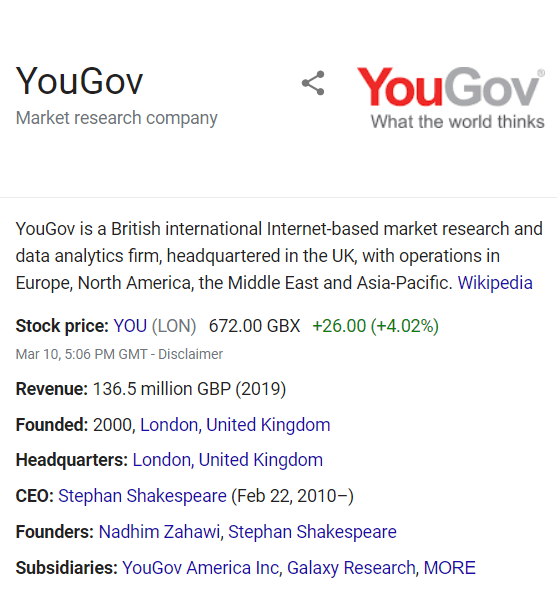
Reading laterally proved difficult in this case, as the Lendkey study was not performed by a peer-reviewed journal. This poses an issue from the start, as it means that their results may not have been thoroughly reviewed by people who might be in relevant fields such as population scientists, sociologists, or even economists. The lack of support from within the field consequently makes it difficult to fully depend on the Lendkey study from a scientific standpoint. The Lendkey study was carried out by YouGov Plc., which is, according to Google, โ€œa British international Internet-based market research and data analytics firm, headquartered in the UK, with operations in Europe, North America, the Middle East and Asia-Pacificโ€.

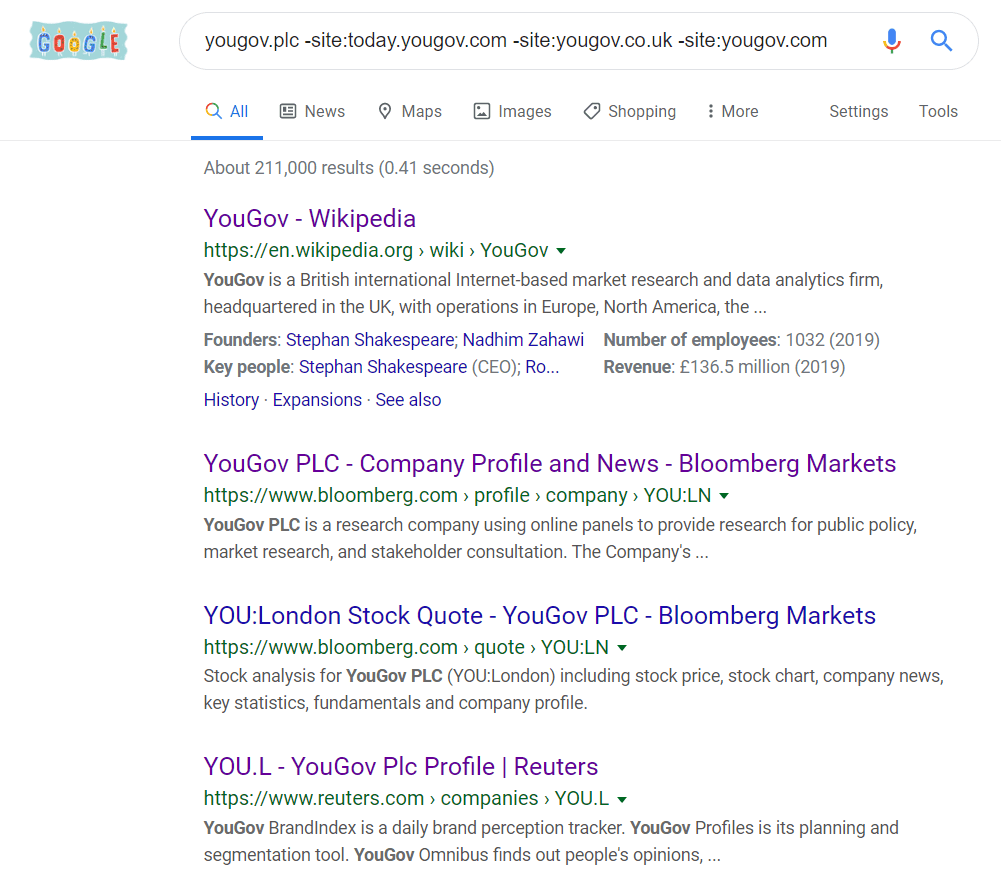
At first I thought that their base in the UK might get in the way of obtaining American respondents and that there might be differences between British and American millennials in marriage trends. This concern might have been misplaced, as YouGov claims to draw from  an online panel of 8 million panellists across 38 countries covering the UK, USA, Europe, the Nordics, the Middle East and Asia Pacificโ€ (YouGov, โ€œOur Panelโ€). YouGov also claims that this group consists of โ€œall ages, socio-economic groups and other demographic types which allows [them] to create nationally representative online samples and access hard to reach groupsโ€ (โ€œOur Panelโ€). Thus it is safe to assume that YouGov is capable of constructing a representative sample. Searching google with the search syntax โ€œyougov.plc -site:today.yougov.com -site:yougov.co.uk -site:yougov.comโ€ to find information on YouGov from outside YouGov itself, I was unable to find any information suggesting YouGovโ€™s unreliability or past flaws in its methods, and sites like Reuters and Bloomberg depict the company as thriving and growing in terms of economic measures like GDP and stocks. Though these measures may simply indicate that their business is booming, it is likely that their business would not be increasing if their work were subpar or inaccurate.

Reading laterally on Qualtrics, who performed the Credit Karma study, there seems to be a bit more evidence of reliability. The Qualtrics Wikipedia page notes that data from Qualtrics is cited in several academic journals, and the associated citations lead to a wide array of journals, including ones in the fields of engineering, business, communications, and marketing. This indicates that the findings from Qualtrics are considered generally reliable across a variety of fields.

The Research Section from the Qualtrics Wikipedia Page (as of 3/10/2020)

Overall, while there does not seem to be much previous work, there are multiple studies which suggest that Millennials are getting married less, that they do have large amounts of student debt, and that a significant portion (though perhaps not a majority) are delaying marriage until their finances improve and loans are paid down or off entirely. These studies are performed on behalf of various lending or credit services, which may constitute some conflict of interest, but they delegated the studies to market research and statistics firms which are seen as viable and reliable gatherers of information. Thus, while I would hesitate to say that this trend represents the entirety of the Millennial generation due to possible issues like the sample size of the studies, it does appear that this claim is at least partially factual, as it is agreed upon by people who deal with loans and have surveyed Millennials that a decent portion of Millennials do in fact put off marriage due to debt, which often takes the form of student loan debt due to the age of this demographic. This serves as a bit of a wake-up call for me. Though I had not planned on getting married particularly soon, I would like for student debt to not be a factor by the time I do, so it seems I need to start putting more energy into financial and career planning so that I can get rid of my own debt as soon as possible and get on with my life on my own terms.


Fact Check #3 – Courtroom Psychology Tests, Unreliable?

Fact Check
Image result for rorschach test
What do you see?

In looking for something to fact check for this post, I went to Google News and searched “recent study” and happened upon an article from ABC News titled “Courtroom psychology tests may be unreliable, study finds“. The article describes a study published in the journal Psychological Science in the Public Interest which reportedly found that courts are “not properly screening out unreliable psychological and IQ tests, allowing junk science to be used as evidence”. This study could mean that some evidence being used in trials might not actually be good evidence at all and could be swaying the jury toward verdicts that could lead to wrongful convictions of innocents. I will be fact checking this study and evaluating whether courts really are allowing unreliable tests and junk science to be permitted as evidence.

In looking for previous work, I searched DuckDuckGo for Politifact.com, Snopes.com, and FactCheck.org for a variety of search terms, including “courtroom psychology tests”, “courtroom psychology tests” in quotes, “courtroom psychology tests unreliable”, “psychological science in the public interest court tests” and “tess neal court psychology”. None of these returned any relevant pages from these sites, so I went on to Wikipedia. After searching “courtroom psychology tests”, I looked at the “Forensic psychology“, “Forensic developmental psychology“, and “Applied psychology” pages, but could only find one line in the first page saying that “Forensic psychologists routinely assess response bias or performance validity.” Thus, there seems to be little previous work on this subject, which makes sense as the study was only published on February 12, 2020.

Next, I tried to move upstream and find the actual study. By googling “Tess Neal courtroom psychology tests study psychological science in the public interest”, I was led to a New York Times article, which linked to a page from the Association for Psychological Science, who are responsible for the Psychological Science in the Public Interest journal, announcing the publishing of the study. I also found a page from the APS assessing the findings of the study. The announcement page linked to the PDF of the actual study. The first thing to note is the presence of many co-authors in the study who each have different qualifications and areas of study. Tess M.S. Neal works at the School of Social and Behavioral Sciences at Arizona State University. Christopher Slobogin works at Vanderbilt University’s Law School. Michael J. Saks works at the Sandra Day Oโ€™Connor College of Law and Department of Psychology at Arizona State University. David L. Faigman works at the Hastings College of the Law at University of California. Finally, Kurt F. Geisinger works at the Buros Center for Testing and College of Education and Human Sciences at the University of Nebraskaโ€“Lincoln. Thus, the authors of this study are coming at the study from both psychological and legal perspectives, covering both sides of the issue.

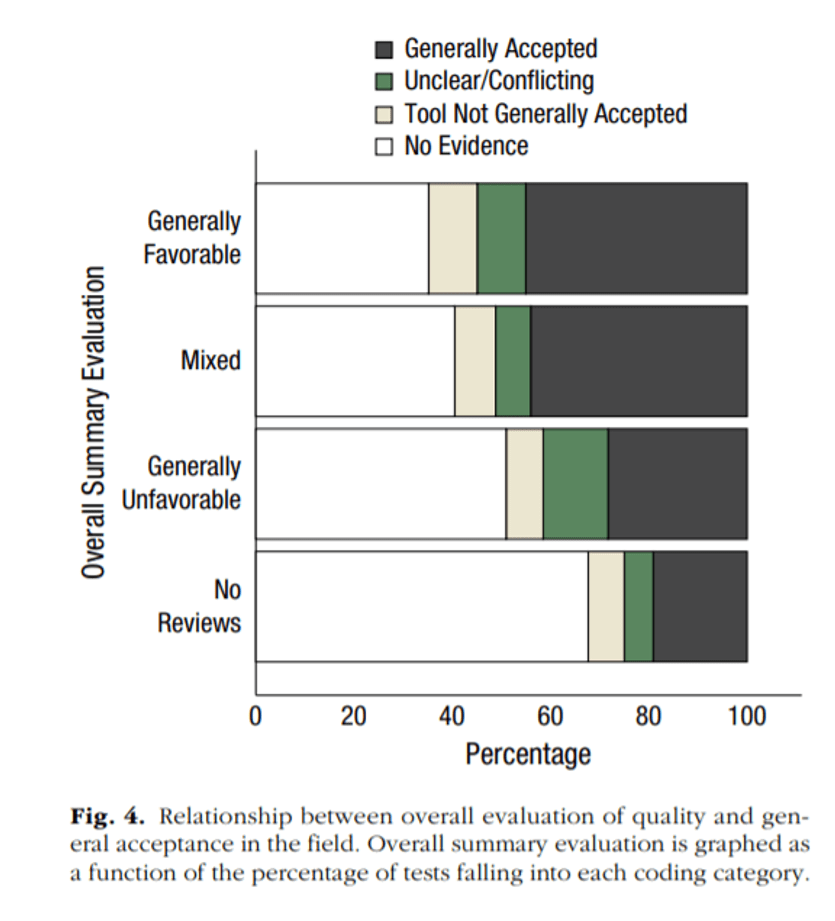
The study involved two aspects. First, they examined 364 different psychological tools used by “forensic mental health practitioners” who responded to 22 surveys, looking at how reliable the tools are and how much professionals question the tools. This part concluded that though 90% of psychological tools used in this context had undergone empirical testing, only 67% are generally accepted in the field and only “40% have generally favorable reviews of their psychometric and technical properties in authorities such as the Mental Measurements Yearbook”. The original ABC article notes that the two most common tests are the “Multiphasic Personality Inventory, which has generally positive reviews in the professional literature”, and the Rorschach inkblot test, which the study claims is heavily debated in the field as being too subjective. Firstly, the study did itself a service in casting a wide net, observing many techniques and almost two dozen surveys, as this lets them do a more comprehensive analysis which covers the wide array of psychological tests which could (and have) appeared in court. The fact that they base it on the Mental Measurements Yearbook also helps, as this bases their conclusions on the what people in the know generally agree upon.

Next, they performed “legal analysis of admissibility challenges with regard to psychological assessments”, looking at the screening of psychological tests in courts, how many are challenged, and how many challenges are successful. This part concludes that there are very few legal challenges to these tests, even though the results of part one indicate that a good portion of those tests are not agreed upon or even favorable. Challenges for any reason only occurred in “5.1% of cases in the sample”, and only half of that was due to questions of validity. Of those, it was found that challenged only “succeeded only about a third of the time”, meaning only about 1.7% of cases in the sample were successfully challenged. According to the study, “Attorneys rarely challenge psychological expert assessment evidence, and when they do, judges often fail to exercise the scrutiny required by law”. This means that despite the disagreements over the validity of some psychological tools, the proportion of challenges to these tools in courts is practically negligible.

In order to further assess the validity of the study, I tried to read laterally about the journal itself. Upon googling “Psychological Science in the Public Interest”, I found that according to Google, the journal, which is published triannually by SAGE publications on behalf of the APS, had an impact factor of 21.286 as of 2017. The Wikipedia entry for this journal matches this figure, citing it from the Journal Citation Reports publication by Clarivate Analytics, which gave the Psychological Science in the Public Interest journal the third highest impact factor in the “Psychology, Multidisciplinary” category. This is a promising sign, indicating that this journal is reputable. Searching google for discussions of this journal excluding the journal’s, APS’s, and SAGE’s input (the people who are involved in the journal), proved to be somewhat difficult, even using search syntax like “psychological science in the public interest -site:psychologicalscience.org -site:sagepub.com”. However, I was able to look at each of the co-authors of the study on Google Scholar to see how many citations they have and thus how involved/influential they are in their fields. Each one had thousands of citations (1110 for Neal, 9780 for Slobogin, 11283 for Saks, 4454 for Faigman, and 5214 for Geisinger). This establishes each of the authors as very active in their fields, meaning that they are much more likely to be experts. All in all, reading laterally shows that the authors of this study and the journal which published it are likely reliable.

In conclusion, this study seems pretty factual. It casts a wide net, does a wide analysis with the data it received which matches with the consensus of people in the know, and comes from a reputable journal with expert authors. Thus, the claim that courts are allowing unreliable psychological tests and junk science to be used as evidence is factually accurate.

Fact Check #2 – Millenials, Debt, and Marriage, Oh My!

Fact Check
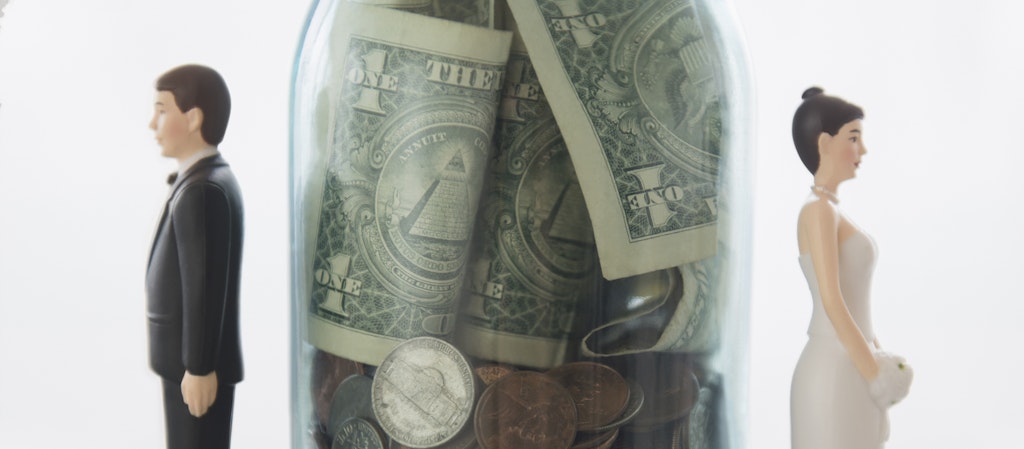
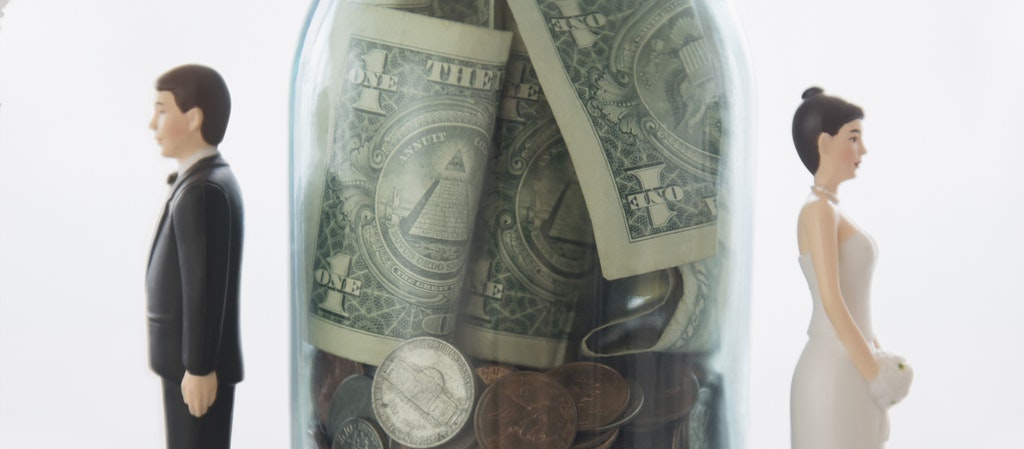
Close up of millennial bride and groom dolls separated by savings jar that represents their finances

The article which I found for this fact check came from USA Today, claiming that young Americans, namely Millennials, are delaying marriage due to student loan debt. USA Today bases this on a study from Lendkey, a cloud platform which allows lenders and borrowers to match online in an attempt to “create the most transparent,accessible and low-cost borrowing options in online lending” (Lendkey’s About Us Page). The article claims that “about one-third of respondents between ages 18 and 34 say they might postpone marriage” in order to pay off student loans. Setting aside that the title of the USA Today article makes it seem as though most or all Millennials are doing this and not merely one-third, the fact I will be checking is whether a significant portion of young people are indeed putting off getting married due to student loan debt.

Checking for previous work proved to be difficult for this. DuckDuckGo searches proved unfruitful, as searching various versions of “millennial marriage debt”, “millennial loans marriage”, “millennial student loans marriage”, “millennial student debt marriage”, “millennial marriage”, “millennial loans”, and even things like “Lendkey student loans” and “Lendkey millennials”. None of these searches yielded pages from Politifact, Snopes, or FactCheck.org which gave figures on either Millennials’ student loans or their marital status. The Wikipedia page for Millennials says under the Social Tendencies section that Millennials “the first in the modern era to have higher levels of student loan debt and unemployment” than previous generations, that projected trends in 2014 suggested “millennials will have a lower marriage rate compared to previous generations”, and that Millennials often “delay some activities considered rites of passage of adulthood” such as leaving their parents’ home and living with a romantic partner. The Millennials page did cite a 2014 article from CNN Money discussing Millennials’ trends with marriage, and this article does also claim “thatย college graduatesย marry later so they are better able to ride out poor economic times just after they finish school”, citing an Urban Institute report. It is worth noting that CNN’s hyperlink on “college graduates” leads to a page on https://buzz.money.cnn.com/, which seems to be a site made with WordPress. The particular page it leads to only discusses a book which encourages graduating women to lean into their careers and does not actually reference Millennials, marriage, or student loan debt. Overall, checking previous work does seem to suggest that Millennials are getting married less, that they have more student loan debt, and that they are delaying milestones of adulthood, but there is little there to prove too much correlation.

With previous work leading to little verification of the claim, I then went upstream on the USA Today article. I first went back to the USA Today article and followed a link to the page where Lendkey discusses their findings. Their findings match the figures cited in the USA Today article, claiming that one third of respondents to their survey between 18-34 “said they might postpone marriage โ€” or had already done so โ€” until student debt is paid off”. The bottom of this page discusses the methodology of this study, saying “All figures, unless otherwise stated, are from YouGov Plc.ย  Total sample size was 1,037 adults who have ever attended college. Fieldwork was undertaken between December 9-13, 2019.ย  The survey was carried out online.” YouGov Plc. is, according to Google, “a British international Internet-based market research and data analytics firm, headquartered in the UK, with operations in Europe, North America, the Middle East and Asia-Pacific”. This lends some legitimacy to their study as it was conducted by a recognized market research firm, thought there might be issues due to their being based in the UK and the sample size. Since they are in Britain and do not specify where their respondents were from, they may be British respondents and thus might not be representative of trends among American Millennials. In addition to this, the survey had just over 1000 respondents across all age brackets and does not specify how many of them were Millennials. Thus, while one third of their Millennial respondents might be postponing marriage, if their actual proportion of Millennial respondents is small then it might not be representative of the actual population of Millennials.

The USA today article does also provide the link to a separate study conducted by Credit Karma among 1,036 American Millennials which suggests that “55% of dating Millennials from a recent Credit Karma survey say they donโ€™t want to get married until their finances are in order” and that 43% of these Millennials list paying down a loan or debt as one of the financial goals they want to achieve. This survey looked at a slightly more relevant demographic, “adults aged 25-38 in a relationship”, which combined with the defined American base makes these findings slightly more reliable.

A graph from the Credit Karma survey findings

Overall, while there does not seem to be much previous work, there are multiple studies which suggest that Millennials are getting married less, that they do have large amounts of student debt, and that a significant portion (though perhaps not a majority) are delaying marriage until their finances improve and loans are payed down or off entirely. Thus, while I would hesitate to say that this trend represents the entirety of the Millennial generation, it does appear that this claim is a fact, as it is agreed upon by people who deal with loans and have surveyed Millenials that a decent portion of Millennials do in fact put off marriage due to debt, which often takes the form of student loan debt due to the age of this demographic.

Fact Check #1 – Records

Fact Check

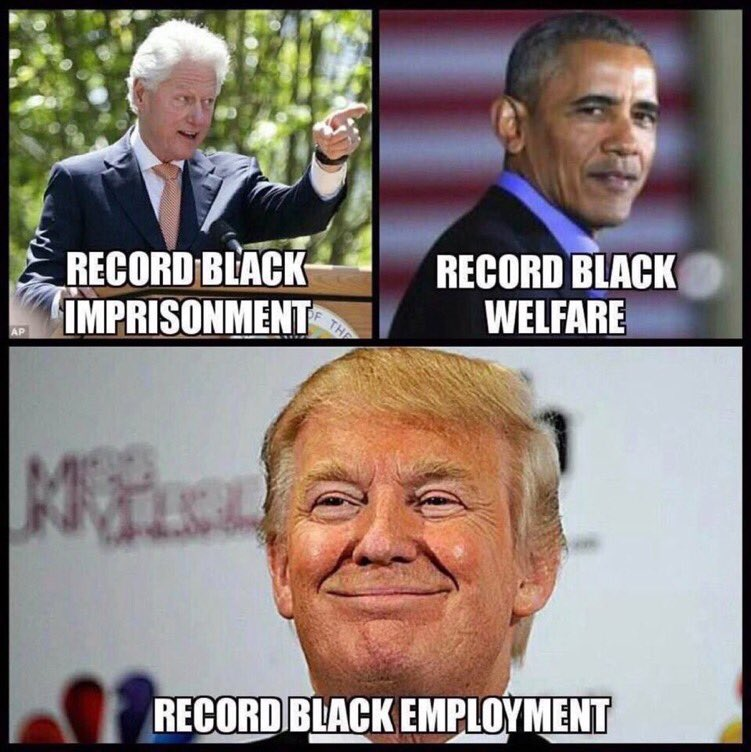
I found this political meme on Facebook while looking for something to fact check. It was posted on October 4, 2018 by the Political Memes page, which claims to be a “Top News Feed with a little Common Sense Political Humor”. It claims its news sources are “as REAL as it gets” and lists “ILoveMyFreedom.org, StarPolitical.com, WayneDupree.com, and Various Mainstream Outlets” as its sources. This meme shows Presidents Clinton, Obama, and Trump with captions under each, implying Clinton’s responsibility for “record black imprisonment”, Obama’s responsibility for “record black welfare”, and Trump’s responsibility for “record black employment”. The meme is clearly meant to paint Donald Trump as more beneficial to the African American community than the last two Democratic Presidents. Though this meme was posted in October of 2018, it seems to reference back to a tweet made by Donald Trump in January of 2018 in response to criticism from people like Jay-Z who took issue with Trumps characterization of African nations as “shitholes”. Trump’s tweet claims that “because of my policies, Black Unemployment has just been reported to be at the LOWEST RATE EVER RECORDED!”.

The first claim which I checked was that of President Trump being responsible for record black employment. First, I went to DuckDuckGo.com and searched “trump black employment site:snopes.com site:politifact.com site:factcheck.org“. This led me to FactCheck.org’s “Trump Takes Undue Credit on Black Unemployment” and Politifact.com’s “Donald Trump is partly correct in response to Jay-Z about black unemployment“. I also went to the Wikipedia entries for “Unemployment in the United States” and the Employment section of “Economic Policy of Donald Trump“.

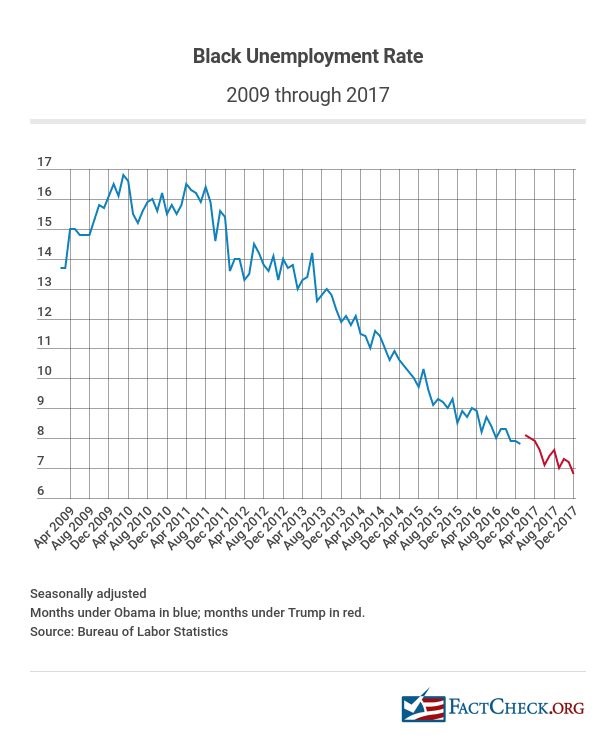
From these sources, it seems that it is factually accurate that as of 2018, African American unemployment was indeed at its lowest recorded point “since recording began in 1972 and 2003” (Wikipedia, “Economic Policy of Donald Trump“). However, the downward trend in African American unemployment, actually started during Barack Obama’s presidency, following a peak in 2009 at the end of the Great Recession. This trend can be seen in the chart below, taken from FactCheck.org and based on information from the Bureau of Labor Statistics. According to Politifact.com, economists also doubt the ability of any President to take credit or blame for statistics like unemployment during their presidencies, as “many other factors play into economic results.” The claim that African American unemployment is at its lowest under Trump is indeed a fact, as each of my sources and statistics confirm, though attributing this fact to Trump’s actions is misleading.

The next claim I fact checked was that there was record black welfare under Barack Obama. This one was more difficult to find information for, which I attribute mainly to the lack of definition of “welfare” in the meme. According to Wikipedia, welfare in the United States usually refers to “means-tested cash benefits…[or] means-tested programs that help individuals or families meet basic nees, including…healthcare through Medicaid, Supplemental Security Income (SSI) benefits and food and nutrition programs (SNAP)… Unemployment Insurance, Social Security, and Medicare”. After getting this definition, I went back to DuckDuckGo and again searched Politifact.com, Snopes.com, and FactCheck.org for various permutations of “African American SNAP”, “African American food stamps”, “African American welfare”, Since the array of welfare programs is so wide, it was difficult to find any figures specifically relating to race. I did find one page on FactCheck.org from 2012 disputing Newt Gingrich’s claim that President Obama added more people to the food stamp program than any other president when in fact George Bush added the most. The page does concede that more people were enrolled in the food stamps program than ever before, but that Obama was not wholly responsible for this. Also, another page giving Obama’s Final Numbers on FactCheck.org claims that food stamp enrollment reached its peak of 49 million people in 2012, but had decreased to 43 million people by the end of his presidency. Wikipedia’s page on the snap program gives slightly different figures, but presents a similar trend. The Wikipedia page on the SNAP page does give a breakdown of race participation from 2010, with 22% of participants being Black and representing the second largest race bracket behind whites (37%), but does not provide a historical breakdown for how these figures change. Overall, the claim that Obama was responsible for record black welfare is nearly unverifiable. Not only does the lack of definition for welfare make it difficult to even find statistics, but there seems to be little available information regarding the racial distribution of welfare programs and nothing to suggest that Obama is single-handedly responsible for the peaks which exist in some programs.

“Average number of persons participating in the SNAP, 2000โ€“2016. The number of participants increased due to the Great Recession, peaking in 2013, and has since fallen.” (Wikipedia)

The final claim I researched was that Clinton was responsible for record black imprisonment. This claim was much easier to research. On DuckDuckGo.com, I once again searched Snopes.com, FactCheck.org, and Politifact.com for “Clinton black imprisonment”, which led to a FactCheck.org page on Bill Clinton and the 1994 Crime Bill and a Politifact.com page “Black Lives Matter activist says ‘the Clintons’ passed policy that led to mass incarceration“. I also searched the aforementioned 1994 Crime Bill on Wikipedia. According to these pages, it is true that the policies enacted by Clinton helped to overcrowd prisons and that a “disproportionate amount of minorities” ended up in prisons (Wikipedia). However, not all the increases in black imprisonment were due to President Clinton, with some of the increase attributed to Nixon’s war on drugs. While I could not find any figures to give the peak of black imprisonment, general incarceration figures do not seem to indicate a peak during Clinton’s presidency, but instead peak around the end of George Bush’s presidency. Thus, the claim that Clinton was responsible for record black imprisonment may have some basis in fact due to the 1994 Crime Bill’s influence disproportionately affecting minorities, but there is no information suggesting that the peak in black incarceration occurred under Clinton, nor that he would be solely responsible for the trend that might create a peak.

Overall, this political meme is one third factual at best, and even then is very misleading. The claims about Clinton and Obama do not seem based on any available figures and present a misleading picture of the ones which are. The claim about Trump is true, but misleading as Trump is not directly responsible for the record low in black unemployment and the trend started before his presidency.