
Truthometer – Millennials Delaying Marriage Over Debt

Fact Check, Truthometer

As a college student, I have often found myself getting concerned about my future of paying off the loans I have incurred. This concern only magnifies when I consider other plans for my future, such as the possibility of buying a house, getting married, and starting a family. Though I will likely have other hurdles to clear first which will assist me in preparing for these plans, I have often thought about how long it will take me to pay down my loans. As it turns out, I’m not alone in the concern. USA Today published an article claiming that many young Americans, namely Millennials, are delaying marriage due to student loan debt. USA Today bases this on a study from Lendkey, a cloud platform which allows lenders and borrowers to match online in an attempt to “create the most transparent,accessible and low-cost borrowing options in online lending” (Lendkey’s About Us Page). The article claims that “about one-third of respondents between ages 18 and 34 say they might postpone marriage” in order to pay off student loans. Setting aside that the title of the USA Today article makes it seem as though most or all Millennials are doing this and not merely one-third, the fact I will be checking is whether a significant portion of young people are indeed putting off getting married due to student loan debt.
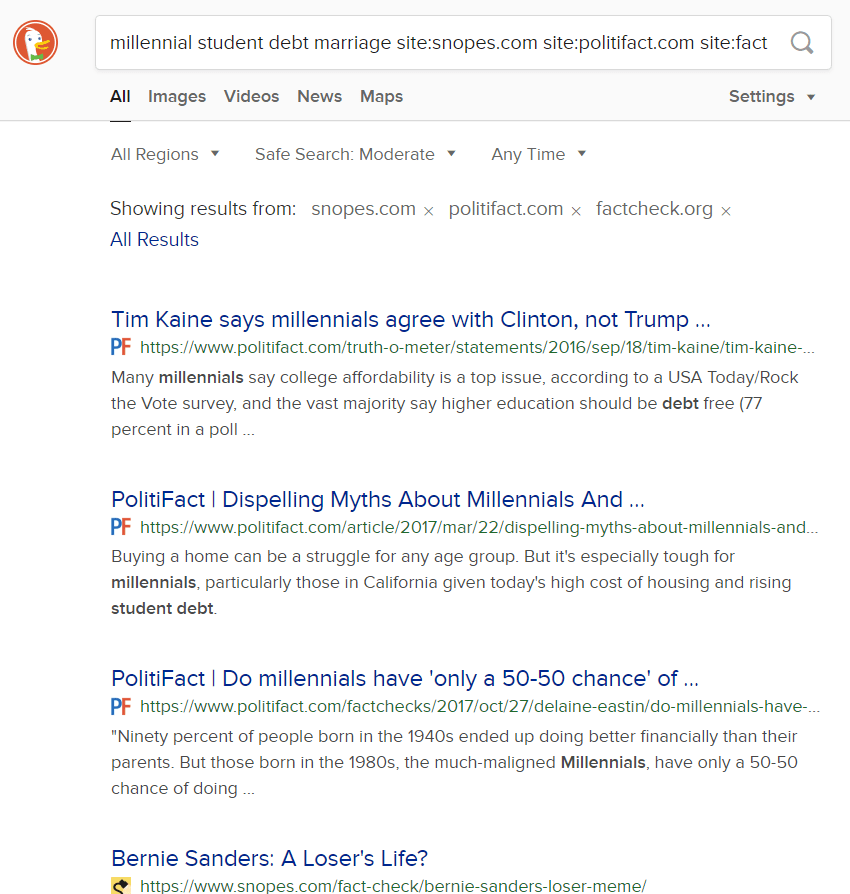

Checking for previous work proved to be difficult for this. DuckDuckGo searches proved unfruitful, as searching various versions of “millennial marriage debt”, “millennial loans marriage”, “millennial student loans marriage”, “millennial student debt marriage”, “millennial marriage”, “millennial loans”, and even things like “Lendkey student loans” and “Lendkey millennials”. None of these searches yielded pages from Politifact, Snopes, or FactCheck.org which gave figures on either Millennials’ student loans or their marital status.

The Wikipedia page for Millennials says under the Social Tendencies section that Millennials “the first in the modern era to have higher levels of student loan debt and unemployment” than previous generations, that projected trends in 2014 suggested “millennials will have a lower marriage rate compared to previous generations”, and that Millennials often “delay some activities considered rites of passage of adulthood” such as leaving their parents’ home and living with a romantic partner. The Millennials page did cite a 2014 article from CNN Money discussing Millennials’ trends with marriage, and this article does also claim “that college graduates marry later so they are better able to ride out poor economic times just after they finish school”, citing an Urban Institute report. It is worth noting that CNN’s hyperlink on “college graduates” leads to a page on https://buzz.money.cnn.com/, which seems to be a site made with WordPress. The particular page it leads to only discusses a book which encourages graduating women to lean into their careers and does not actually reference Millennials, marriage, or student loan debt. Overall, checking previous work does seem to suggest that Millennials are getting married less, that they have more student loan debt, and that they are delaying milestones of adulthood, but there is little there to prove too much correlation.

The Social Tendencies section of the Millennials Wikipedia Page (as of 3/10/2020)

With previous work leading to little verification of the claim, I then went upstream on the USA Today article. I first went back to the USA Today article and followed a link to the page where Lendkey discusses their findings. Their findings match the figures cited in the USA Today article, claiming that one third of respondents to their survey between 18-34 “said they might postpone marriage — or had already done so — until student debt is paid off”. The bottom of this page discusses the methodology of this study, saying “All figures, unless otherwise stated, are from YouGov Plc.  Total sample size was 1,037 adults who have ever attended college. Fieldwork was undertaken between December 9-13, 2019. The survey was carried out online.” The survey had just over 1000 respondents across all age brackets and does not specify how many of them were Millennials. Thus, while one third of their Millennial respondents might be postponing marriage, if their actual proportion of Millennial respondents is small then it might not be representative of the actual population of Millennials.
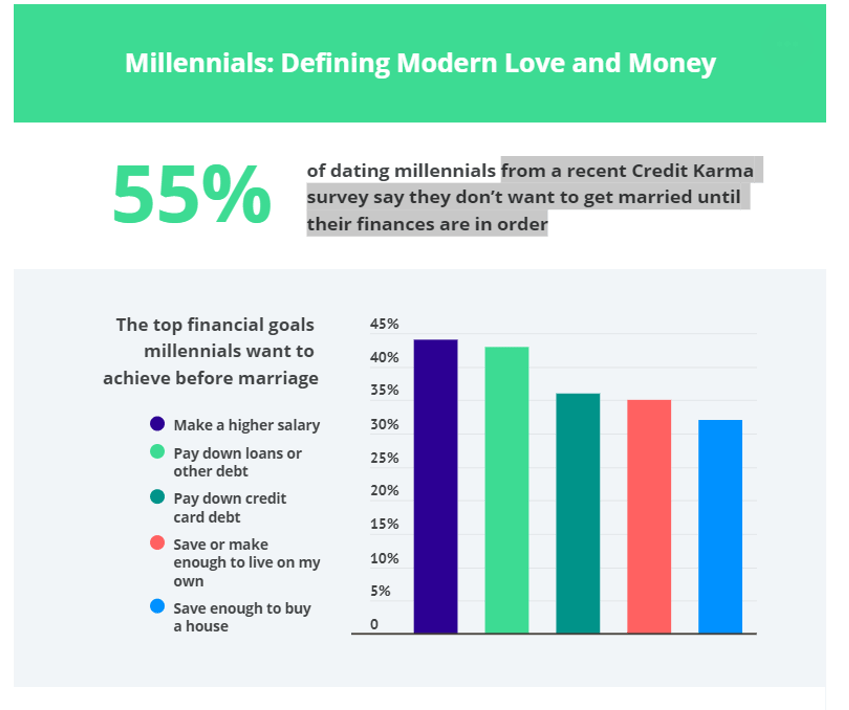
The USA today article does also provide the link to a separate study conducted by Qualtrics on behalf of Credit Karma among 1,036 American Millennials which suggests that “55% of dating Millennials from a recent Credit Karma survey say they don’t want to get married until their finances are in order” and that 43% of these Millennials list paying down a loan or debt as one of the financial goals they want to achieve. This survey looked at a slightly more relevant demographic, “adults aged 25-38 in a relationship”, which combined with the defined American base makes these findings slightly more reliable.
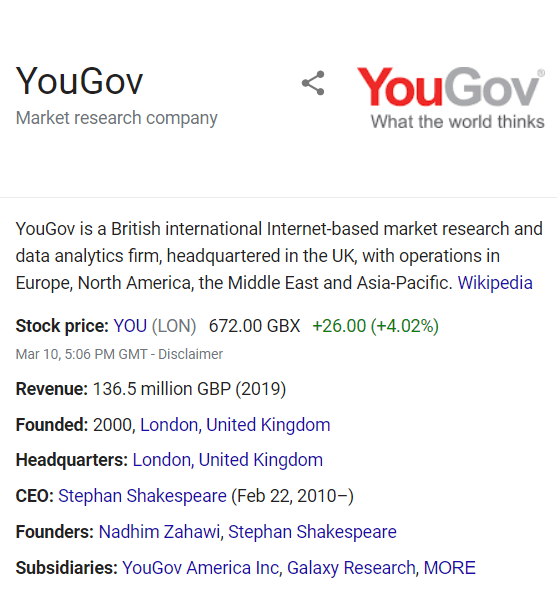

Reading laterally proved difficult in this case, as the Lendkey study was not performed by a peer-reviewed journal. This poses an issue from the start, as it means that their results may not have been thoroughly reviewed by people who might be in relevant fields such as population scientists, sociologists, or even economists. The lack of support from within the field consequently makes it difficult to fully depend on the Lendkey study from a scientific standpoint. The Lendkey study was carried out by YouGov Plc., which is, according to Google, “a British international Internet-based market research and data analytics firm, headquartered in the UK, with operations in Europe, North America, the Middle East and Asia-Pacific”.
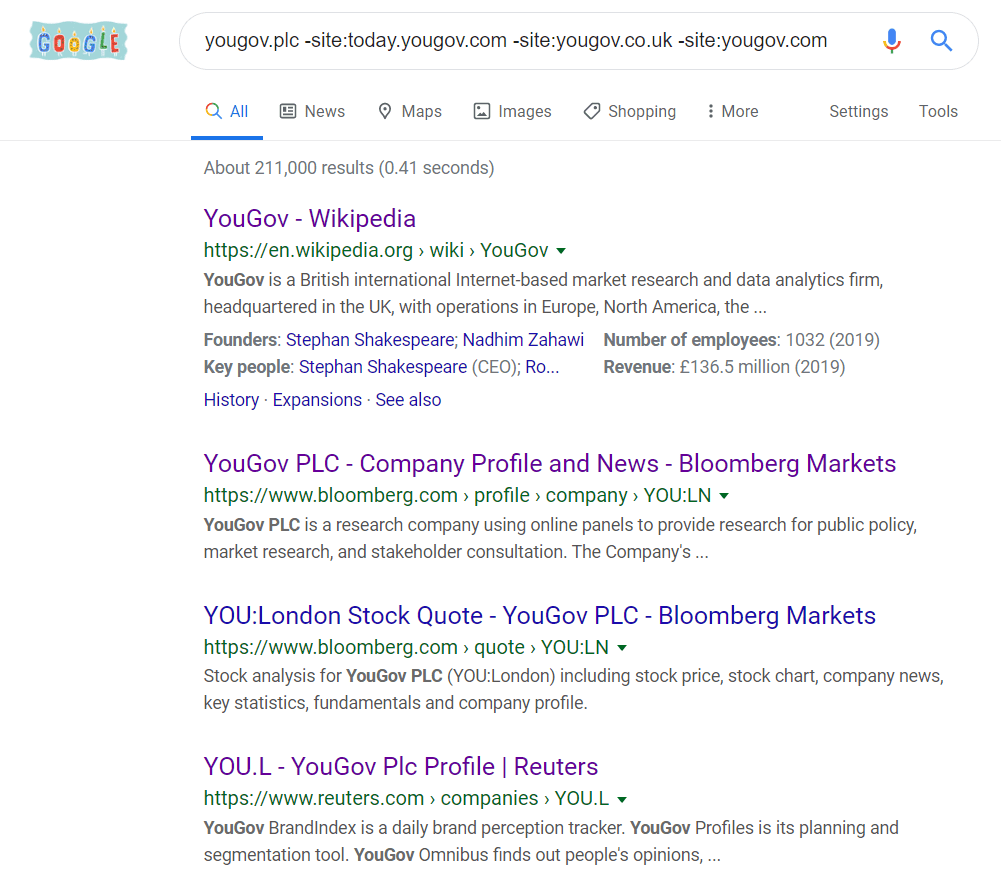
At first I thought that their base in the UK might get in the way of obtaining American respondents and that there might be differences between British and American millennials in marriage trends. This concern might have been misplaced, as YouGov claims to draw from  an online panel of 8 million panellists across 38 countries covering the UK, USA, Europe, the Nordics, the Middle East and Asia Pacific” (YouGov, “Our Panel”). YouGov also claims that this group consists of “all ages, socio-economic groups and other demographic types which allows [them] to create nationally representative online samples and access hard to reach groups” (“Our Panel”). Thus it is safe to assume that YouGov is capable of constructing a representative sample. Searching google with the search syntax “yougov.plc -site:today.yougov.com -site:yougov.co.uk -site:yougov.com” to find information on YouGov from outside YouGov itself, I was unable to find any information suggesting YouGov’s unreliability or past flaws in its methods, and sites like Reuters and Bloomberg depict the company as thriving and growing in terms of economic measures like GDP and stocks. Though these measures may simply indicate that their business is booming, it is likely that their business would not be increasing if their work were subpar or inaccurate.

Reading laterally on Qualtrics, who performed the Credit Karma study, there seems to be a bit more evidence of reliability. The Qualtrics Wikipedia page notes that data from Qualtrics is cited in several academic journals, and the associated citations lead to a wide array of journals, including ones in the fields of engineering, business, communications, and marketing. This indicates that the findings from Qualtrics are considered generally reliable across a variety of fields.

The Research Section from the Qualtrics Wikipedia Page (as of 3/10/2020)

Overall, while there does not seem to be much previous work, there are multiple studies which suggest that Millennials are getting married less, that they do have large amounts of student debt, and that a significant portion (though perhaps not a majority) are delaying marriage until their finances improve and loans are paid down or off entirely. These studies are performed on behalf of various lending or credit services, which may constitute some conflict of interest, but they delegated the studies to market research and statistics firms which are seen as viable and reliable gatherers of information. Thus, while I would hesitate to say that this trend represents the entirety of the Millennial generation due to possible issues like the sample size of the studies, it does appear that this claim is at least partially factual, as it is agreed upon by people who deal with loans and have surveyed Millennials that a decent portion of Millennials do in fact put off marriage due to debt, which often takes the form of student loan debt due to the age of this demographic. This serves as a bit of a wake-up call for me. Though I had not planned on getting married particularly soon, I would like for student debt to not be a factor by the time I do, so it seems I need to start putting more energy into financial and career planning so that I can get rid of my own debt as soon as possible and get on with my life on my own terms.

Fact Check #3 – Courtroom Psychology Tests, Unreliable?

Fact Check
Image result for rorschach test
What do you see?

In looking for something to fact check for this post, I went to Google News and searched “recent study” and happened upon an article from ABC News titled “Courtroom psychology tests may be unreliable, study finds“. The article describes a study published in the journal Psychological Science in the Public Interest which reportedly found that courts are “not properly screening out unreliable psychological and IQ tests, allowing junk science to be used as evidence”. This study could mean that some evidence being used in trials might not actually be good evidence at all and could be swaying the jury toward verdicts that could lead to wrongful convictions of innocents. I will be fact checking this study and evaluating whether courts really are allowing unreliable tests and junk science to be permitted as evidence.

In looking for previous work, I searched DuckDuckGo for Politifact.com, Snopes.com, and FactCheck.org for a variety of search terms, including “courtroom psychology tests”, “courtroom psychology tests” in quotes, “courtroom psychology tests unreliable”, “psychological science in the public interest court tests” and “tess neal court psychology”. None of these returned any relevant pages from these sites, so I went on to Wikipedia. After searching “courtroom psychology tests”, I looked at the “Forensic psychology“, “Forensic developmental psychology“, and “Applied psychology” pages, but could only find one line in the first page saying that “Forensic psychologists routinely assess response bias or performance validity.” Thus, there seems to be little previous work on this subject, which makes sense as the study was only published on February 12, 2020.

Next, I tried to move upstream and find the actual study. By googling “Tess Neal courtroom psychology tests study psychological science in the public interest”, I was led to a New York Times article, which linked to a page from the Association for Psychological Science, who are responsible for the Psychological Science in the Public Interest journal, announcing the publishing of the study. I also found a page from the APS assessing the findings of the study. The announcement page linked to the PDF of the actual study. The first thing to note is the presence of many co-authors in the study who each have different qualifications and areas of study. Tess M.S. Neal works at the School of Social and Behavioral Sciences at Arizona State University. Christopher Slobogin works at Vanderbilt University’s Law School. Michael J. Saks works at the Sandra Day O’Connor College of Law and Department of Psychology at Arizona State University. David L. Faigman works at the Hastings College of the Law at University of California. Finally, Kurt F. Geisinger works at the Buros Center for Testing and College of Education and Human Sciences at the University of Nebraska–Lincoln. Thus, the authors of this study are coming at the study from both psychological and legal perspectives, covering both sides of the issue.

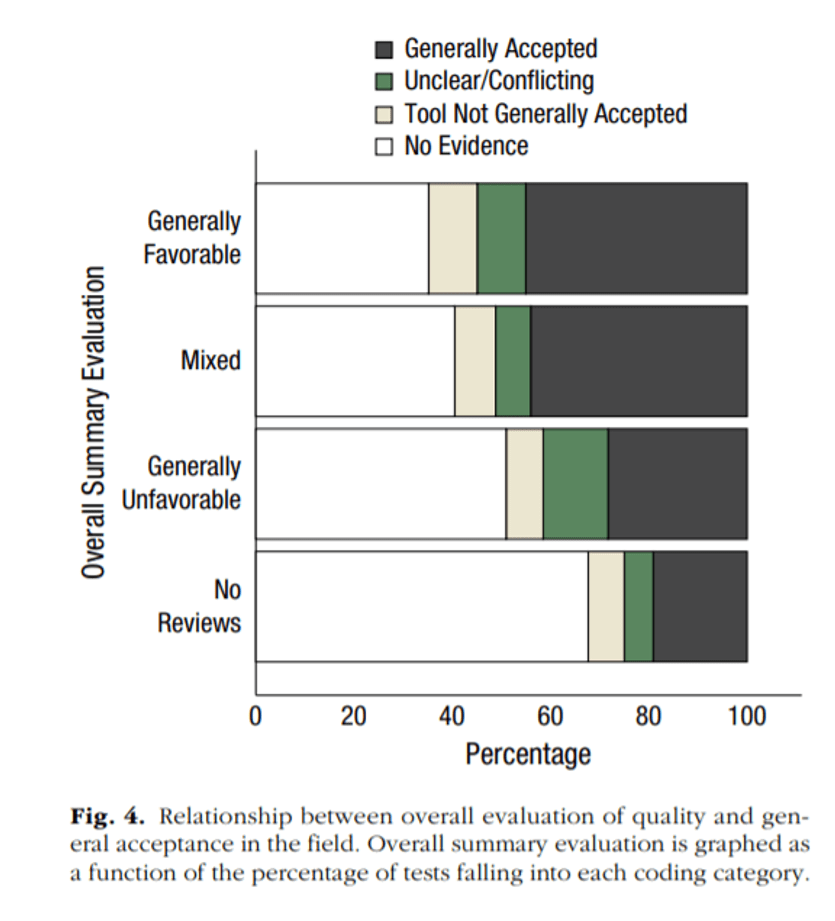
The study involved two aspects. First, they examined 364 different psychological tools used by “forensic mental health practitioners” who responded to 22 surveys, looking at how reliable the tools are and how much professionals question the tools. This part concluded that though 90% of psychological tools used in this context had undergone empirical testing, only 67% are generally accepted in the field and only “40% have generally favorable reviews of their psychometric and technical properties in authorities such as the Mental Measurements Yearbook”. The original ABC article notes that the two most common tests are the “Multiphasic Personality Inventory, which has generally positive reviews in the professional literature”, and the Rorschach inkblot test, which the study claims is heavily debated in the field as being too subjective. Firstly, the study did itself a service in casting a wide net, observing many techniques and almost two dozen surveys, as this lets them do a more comprehensive analysis which covers the wide array of psychological tests which could (and have) appeared in court. The fact that they base it on the Mental Measurements Yearbook also helps, as this bases their conclusions on the what people in the know generally agree upon.

Next, they performed “legal analysis of admissibility challenges with regard to psychological assessments”, looking at the screening of psychological tests in courts, how many are challenged, and how many challenges are successful. This part concludes that there are very few legal challenges to these tests, even though the results of part one indicate that a good portion of those tests are not agreed upon or even favorable. Challenges for any reason only occurred in “5.1% of cases in the sample”, and only half of that was due to questions of validity. Of those, it was found that challenged only “succeeded only about a third of the time”, meaning only about 1.7% of cases in the sample were successfully challenged. According to the study, “Attorneys rarely challenge psychological expert assessment evidence, and when they do, judges often fail to exercise the scrutiny required by law”. This means that despite the disagreements over the validity of some psychological tools, the proportion of challenges to these tools in courts is practically negligible.

In order to further assess the validity of the study, I tried to read laterally about the journal itself. Upon googling “Psychological Science in the Public Interest”, I found that according to Google, the journal, which is published triannually by SAGE publications on behalf of the APS, had an impact factor of 21.286 as of 2017. The Wikipedia entry for this journal matches this figure, citing it from the Journal Citation Reports publication by Clarivate Analytics, which gave the Psychological Science in the Public Interest journal the third highest impact factor in the “Psychology, Multidisciplinary” category. This is a promising sign, indicating that this journal is reputable. Searching google for discussions of this journal excluding the journal’s, APS’s, and SAGE’s input (the people who are involved in the journal), proved to be somewhat difficult, even using search syntax like “psychological science in the public interest -site:psychologicalscience.org -site:sagepub.com”. However, I was able to look at each of the co-authors of the study on Google Scholar to see how many citations they have and thus how involved/influential they are in their fields. Each one had thousands of citations (1110 for Neal, 9780 for Slobogin, 11283 for Saks, 4454 for Faigman, and 5214 for Geisinger). This establishes each of the authors as very active in their fields, meaning that they are much more likely to be experts. All in all, reading laterally shows that the authors of this study and the journal which published it are likely reliable.

In conclusion, this study seems pretty factual. It casts a wide net, does a wide analysis with the data it received which matches with the consensus of people in the know, and comes from a reputable journal with expert authors. Thus, the claim that courts are allowing unreliable psychological tests and junk science to be used as evidence is factually accurate.

Fact Check #2 – Millenials, Debt, and Marriage, Oh My!

Fact Check
Close up of millennial bride and groom dolls separated by savings jar that represents their finances

The article which I found for this fact check came from USA Today, claiming that young Americans, namely Millennials, are delaying marriage due to student loan debt. USA Today bases this on a study from Lendkey, a cloud platform which allows lenders and borrowers to match online in an attempt to “create the most transparent,accessible and low-cost borrowing options in online lending” (Lendkey’s About Us Page). The article claims that “about one-third of respondents between ages 18 and 34 say they might postpone marriage” in order to pay off student loans. Setting aside that the title of the USA Today article makes it seem as though most or all Millennials are doing this and not merely one-third, the fact I will be checking is whether a significant portion of young people are indeed putting off getting married due to student loan debt.

Checking for previous work proved to be difficult for this. DuckDuckGo searches proved unfruitful, as searching various versions of “millennial marriage debt”, “millennial loans marriage”, “millennial student loans marriage”, “millennial student debt marriage”, “millennial marriage”, “millennial loans”, and even things like “Lendkey student loans” and “Lendkey millennials”. None of these searches yielded pages from Politifact, Snopes, or FactCheck.org which gave figures on either Millennials’ student loans or their marital status. The Wikipedia page for Millennials says under the Social Tendencies section that Millennials “the first in the modern era to have higher levels of student loan debt and unemployment” than previous generations, that projected trends in 2014 suggested “millennials will have a lower marriage rate compared to previous generations”, and that Millennials often “delay some activities considered rites of passage of adulthood” such as leaving their parents’ home and living with a romantic partner. The Millennials page did cite a 2014 article from CNN Money discussing Millennials’ trends with marriage, and this article does also claim “that college graduates marry later so they are better able to ride out poor economic times just after they finish school”, citing an Urban Institute report. It is worth noting that CNN’s hyperlink on “college graduates” leads to a page on https://buzz.money.cnn.com/, which seems to be a site made with WordPress. The particular page it leads to only discusses a book which encourages graduating women to lean into their careers and does not actually reference Millennials, marriage, or student loan debt. Overall, checking previous work does seem to suggest that Millennials are getting married less, that they have more student loan debt, and that they are delaying milestones of adulthood, but there is little there to prove too much correlation.

With previous work leading to little verification of the claim, I then went upstream on the USA Today article. I first went back to the USA Today article and followed a link to the page where Lendkey discusses their findings. Their findings match the figures cited in the USA Today article, claiming that one third of respondents to their survey between 18-34 “said they might postpone marriage — or had already done so — until student debt is paid off”. The bottom of this page discusses the methodology of this study, saying “All figures, unless otherwise stated, are from YouGov Plc.  Total sample size was 1,037 adults who have ever attended college. Fieldwork was undertaken between December 9-13, 2019.  The survey was carried out online.” YouGov Plc. is, according to Google, “a British international Internet-based market research and data analytics firm, headquartered in the UK, with operations in Europe, North America, the Middle East and Asia-Pacific”. This lends some legitimacy to their study as it was conducted by a recognized market research firm, thought there might be issues due to their being based in the UK and the sample size. Since they are in Britain and do not specify where their respondents were from, they may be British respondents and thus might not be representative of trends among American Millennials. In addition to this, the survey had just over 1000 respondents across all age brackets and does not specify how many of them were Millennials. Thus, while one third of their Millennial respondents might be postponing marriage, if their actual proportion of Millennial respondents is small then it might not be representative of the actual population of Millennials.

The USA today article does also provide the link to a separate study conducted by Credit Karma among 1,036 American Millennials which suggests that “55% of dating Millennials from a recent Credit Karma survey say they don’t want to get married until their finances are in order” and that 43% of these Millennials list paying down a loan or debt as one of the financial goals they want to achieve. This survey looked at a slightly more relevant demographic, “adults aged 25-38 in a relationship”, which combined with the defined American base makes these findings slightly more reliable.

A graph from the Credit Karma survey findings

Overall, while there does not seem to be much previous work, there are multiple studies which suggest that Millennials are getting married less, that they do have large amounts of student debt, and that a significant portion (though perhaps not a majority) are delaying marriage until their finances improve and loans are payed down or off entirely. Thus, while I would hesitate to say that this trend represents the entirety of the Millennial generation, it does appear that this claim is a fact, as it is agreed upon by people who deal with loans and have surveyed Millenials that a decent portion of Millennials do in fact put off marriage due to debt, which often takes the form of student loan debt due to the age of this demographic.

Fact Check #1 – Records

Fact Check

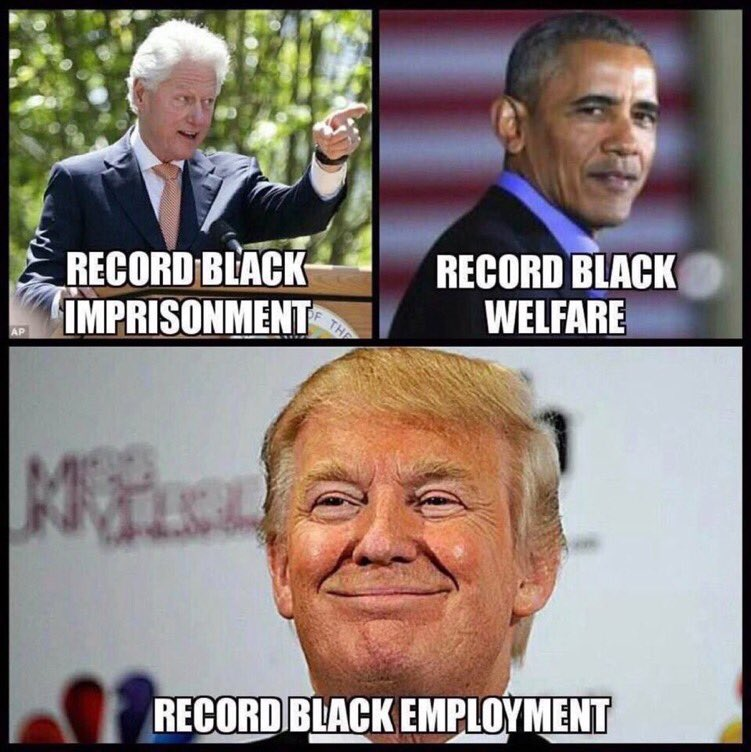
I found this political meme on Facebook while looking for something to fact check. It was posted on October 4, 2018 by the Political Memes page, which claims to be a “Top News Feed with a little Common Sense Political Humor”. It claims its news sources are “as REAL as it gets” and lists “ILoveMyFreedom.org, StarPolitical.com, WayneDupree.com, and Various Mainstream Outlets” as its sources. This meme shows Presidents Clinton, Obama, and Trump with captions under each, implying Clinton’s responsibility for “record black imprisonment”, Obama’s responsibility for “record black welfare”, and Trump’s responsibility for “record black employment”. The meme is clearly meant to paint Donald Trump as more beneficial to the African American community than the last two Democratic Presidents. Though this meme was posted in October of 2018, it seems to reference back to a tweet made by Donald Trump in January of 2018 in response to criticism from people like Jay-Z who took issue with Trumps characterization of African nations as “shitholes”. Trump’s tweet claims that “because of my policies, Black Unemployment has just been reported to be at the LOWEST RATE EVER RECORDED!”.

The first claim which I checked was that of President Trump being responsible for record black employment. First, I went to DuckDuckGo.com and searched “trump black employment site:snopes.com site:politifact.com site:factcheck.org“. This led me to FactCheck.org’s “Trump Takes Undue Credit on Black Unemployment” and Politifact.com’s “Donald Trump is partly correct in response to Jay-Z about black unemployment“. I also went to the Wikipedia entries for “Unemployment in the United States” and the Employment section of “Economic Policy of Donald Trump“.

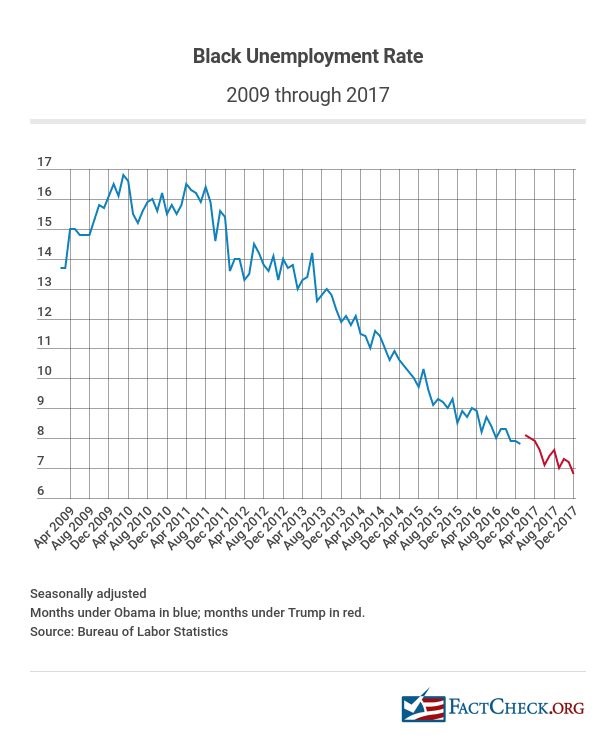
From these sources, it seems that it is factually accurate that as of 2018, African American unemployment was indeed at its lowest recorded point “since recording began in 1972 and 2003” (Wikipedia, “Economic Policy of Donald Trump“). However, the downward trend in African American unemployment, actually started during Barack Obama’s presidency, following a peak in 2009 at the end of the Great Recession. This trend can be seen in the chart below, taken from FactCheck.org and based on information from the Bureau of Labor Statistics. According to Politifact.com, economists also doubt the ability of any President to take credit or blame for statistics like unemployment during their presidencies, as “many other factors play into economic results.” The claim that African American unemployment is at its lowest under Trump is indeed a fact, as each of my sources and statistics confirm, though attributing this fact to Trump’s actions is misleading.

The next claim I fact checked was that there was record black welfare under Barack Obama. This one was more difficult to find information for, which I attribute mainly to the lack of definition of “welfare” in the meme. According to Wikipedia, welfare in the United States usually refers to “means-tested cash benefits…[or] means-tested programs that help individuals or families meet basic nees, including…healthcare through Medicaid, Supplemental Security Income (SSI) benefits and food and nutrition programs (SNAP)… Unemployment Insurance, Social Security, and Medicare”. After getting this definition, I went back to DuckDuckGo and again searched Politifact.com, Snopes.com, and FactCheck.org for various permutations of “African American SNAP”, “African American food stamps”, “African American welfare”, Since the array of welfare programs is so wide, it was difficult to find any figures specifically relating to race. I did find one page on FactCheck.org from 2012 disputing Newt Gingrich’s claim that President Obama added more people to the food stamp program than any other president when in fact George Bush added the most. The page does concede that more people were enrolled in the food stamps program than ever before, but that Obama was not wholly responsible for this. Also, another page giving Obama’s Final Numbers on FactCheck.org claims that food stamp enrollment reached its peak of 49 million people in 2012, but had decreased to 43 million people by the end of his presidency. Wikipedia’s page on the snap program gives slightly different figures, but presents a similar trend. The Wikipedia page on the SNAP page does give a breakdown of race participation from 2010, with 22% of participants being Black and representing the second largest race bracket behind whites (37%), but does not provide a historical breakdown for how these figures change. Overall, the claim that Obama was responsible for record black welfare is nearly unverifiable. Not only does the lack of definition for welfare make it difficult to even find statistics, but there seems to be little available information regarding the racial distribution of welfare programs and nothing to suggest that Obama is single-handedly responsible for the peaks which exist in some programs.

“Average number of persons participating in the SNAP, 2000–2016. The number of participants increased due to the Great Recession, peaking in 2013, and has since fallen.” (Wikipedia)

The final claim I researched was that Clinton was responsible for record black imprisonment. This claim was much easier to research. On DuckDuckGo.com, I once again searched Snopes.com, FactCheck.org, and Politifact.com for “Clinton black imprisonment”, which led to a FactCheck.org page on Bill Clinton and the 1994 Crime Bill and a Politifact.com page “Black Lives Matter activist says ‘the Clintons’ passed policy that led to mass incarceration“. I also searched the aforementioned 1994 Crime Bill on Wikipedia. According to these pages, it is true that the policies enacted by Clinton helped to overcrowd prisons and that a “disproportionate amount of minorities” ended up in prisons (Wikipedia). However, not all the increases in black imprisonment were due to President Clinton, with some of the increase attributed to Nixon’s war on drugs. While I could not find any figures to give the peak of black imprisonment, general incarceration figures do not seem to indicate a peak during Clinton’s presidency, but instead peak around the end of George Bush’s presidency. Thus, the claim that Clinton was responsible for record black imprisonment may have some basis in fact due to the 1994 Crime Bill’s influence disproportionately affecting minorities, but there is no information suggesting that the peak in black incarceration occurred under Clinton, nor that he would be solely responsible for the trend that might create a peak.

Overall, this political meme is one third factual at best, and even then is very misleading. The claims about Clinton and Obama do not seem based on any available figures and present a misleading picture of the ones which are. The claim about Trump is true, but misleading as Trump is not directly responsible for the record low in black unemployment and the trend started before his presidency.